Funded by Promobilia

Situated Agentic Intelligence

SAInt
Robotic
Partners
for Life

Humanoid robots that understand context, learn from interaction, and provide proactive verbal and physical support - bridging the care gap for older adults and people with special needs.

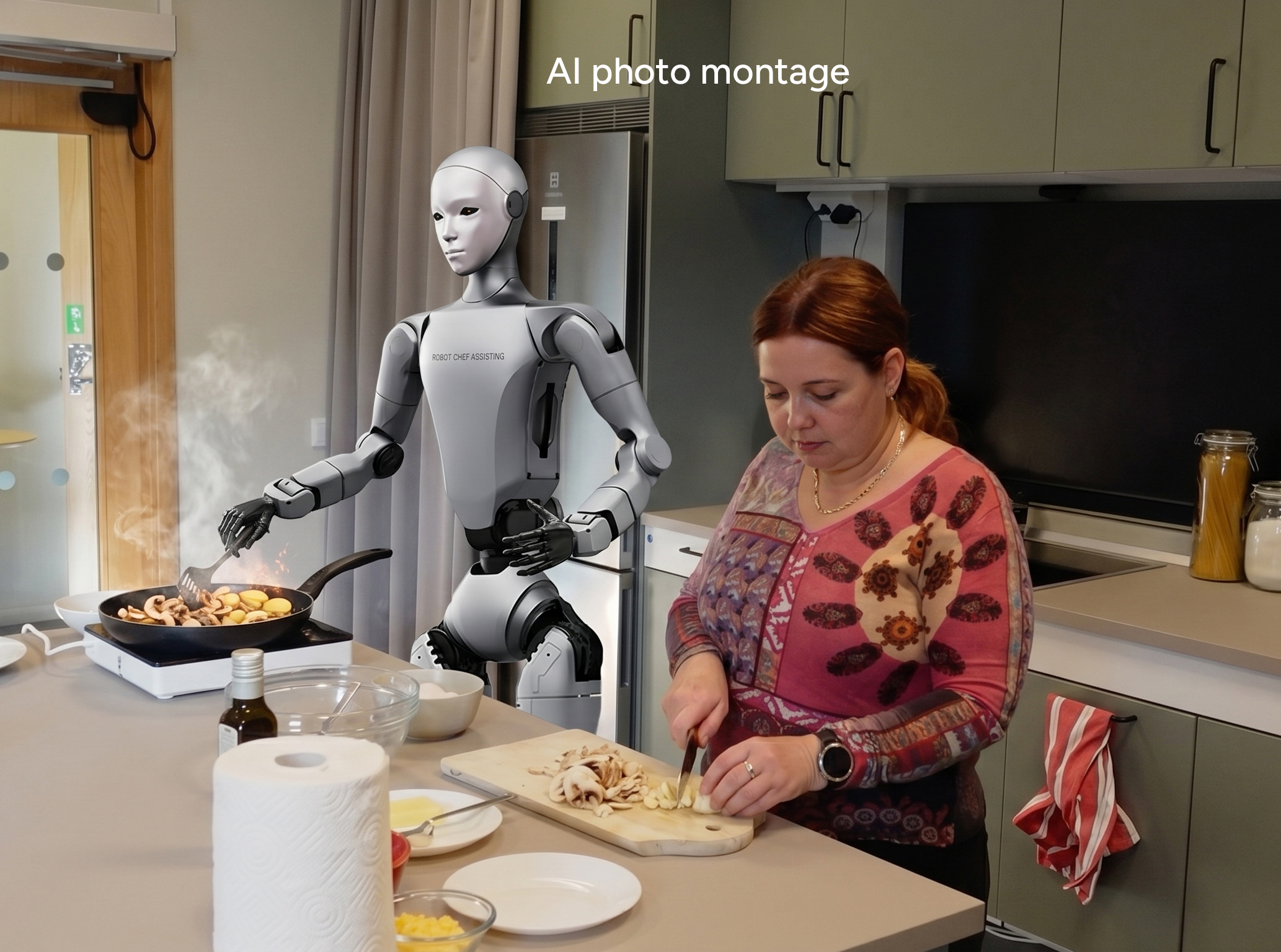
A Unitree humanoid robot assisting a person in a domestic kitchen
KTH IRL Interaction & Robotics Lab

Independent Living

Enabling older adults and people with disabilities to live safely at home with 24/7 robotic support.

Proactive Collaboration

Robots that infer needs and offer help at the right moment, not just responding to commands.

Human-Centred Science

Rigorous user studies with real participants, guided by comprehensive ethical protocols.

About the Project

Bridging the
Care Gap

Sweden's population aged 80 and over will grow by 50% in the next decade. Professional caregivers are in decline. SAInt addresses this structural challenge with agentic robotics.

The convergence of physically capable humanoid robots - such as 1X Neo, Figure A03, Tesla Optimus, BostonDynamics Atlas, Rainbow HRN-Y1 and Unitree H1 - with large language and vision models creates the first genuine technical foundation for domestic robotic assistance.

SAInt (Situated Agentic Interaction) is a five year project funded by Promobilia. It moves beyond conventional assistive robotics, which rely on explicit command structures, toward agentic partners capable of contextual understanding, goal inference through natural communication, and proactive collaboration integrated into daily activities.

The SAInt robot is designed not to replace human care, but to augment it, providing a continuous safety net between scheduled visits and empowering individuals to live on their own terms.

24/7 Presence

Continuous support between care visits, ensuring safety and independence at home around the clock.

Context Awareness

Understanding the user's physical situation, routine deviations, and cognitive state through multimodal perception.

Natural Interaction

Dialogue through speech, gesture, and expression — no specialist commands or technical knowledge required.

Safe & Ethical

All research follows rigorous ethical protocols with GDPR-compliant data handling and adaptive safety constraints.

Research

Three Scientific Pillars

SAInt integrates three interdependent work packages, each led by a specialist PI, to build a complete agentic robotic system operating in real domestic environments.

WP1

Proactive Situation-Aware Interaction

Lead: Prof. Joakim Gustafson, TMH

This work advances beyond reactive systems toward architectures that understand user goals, task states, and cognitive conditions, determining when and how to provide verbal and physical assistance. Swedish robot voices with the prosody and style controls needed to engage in both chatty and instructional interaction with elderly users.

Grounded in over 30 years of expertise in multimodal spoken dialogue systems and human-robot interaction.

WP2

Real-time Human Action & Environment Modeling

Lead: Prof. Danica Kragic, RPL

Multimodal representetion learning for real-time human action and environment modeling in complex domestic settings. Multi-sensor fusion creates accurate 3D scene representations; lightweight neural fields enable learning from small, unstructured datasets and bridge simulation to reality.

Builds on deep expertise in computer vision, dual-arm manipulation, and data-driven grasp synthesis.

WP3

Safe Physical
Robot Assistance

Lead: Asst. Prof. Noémie Jaquier, RPL

Motor intelligence enabling safe, compliant, and dexterous physical actions in direct collaboration with users. Integrates machine learning and control theory: multi-task learning, combining robust sim-to-real transfer techniques with adaptive autonomy controllers that dynamically adjust control authority.

Grounded in Riemannian geometry and physics-based inductive bias for data-efficient robot learning.

Five Interaction Scenarios

Structured in increasing complexity each scenario builds on the previous, forming an iterative research pathway from passive observation to full collaborative autonomy.

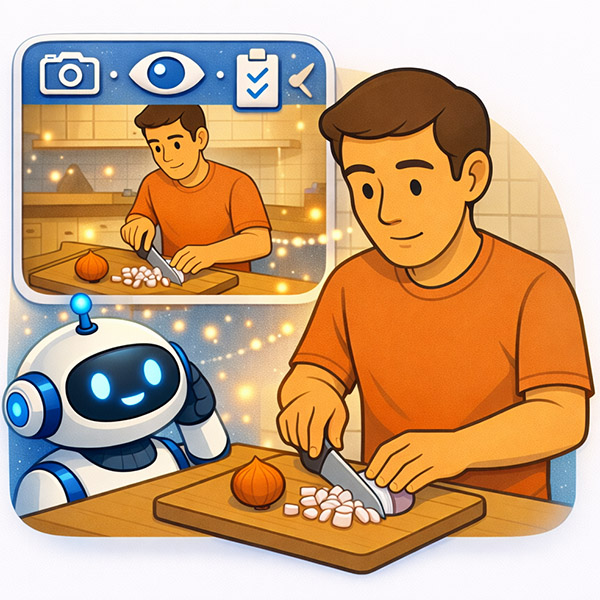
Observer — robot watches human chop vegetables in kitchen
Observer

The robot passively observes a human performing a task to build a task model, using teleoperation to position cameras on both the human and the environment.

Apprentice — robot with question face watches human cook
Apprentice

The robot actively learns by asking the human to repeat activities or provide explanations, building its understanding of task-fulfilling actions.

Instructor — robot gestures stop while human prepares food
Instructor

The robot follows a predefined plan, guiding the human with dialogue and gestures, waiting for the user to verbally inform completion before proceeding to the next step.

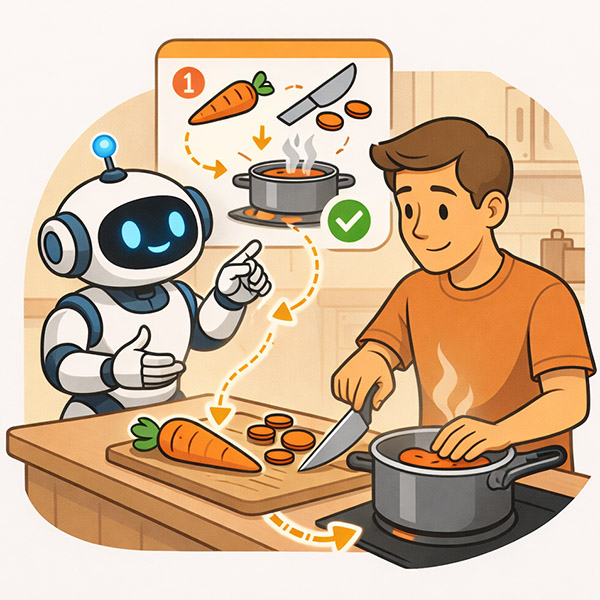
Teacher — robot projects holographic instructions while human cuts carrot
Teacher

The robot gives instructions and dynamically adapts its execution plan based on continuous interaction, detecting the human's actions and cognitive state.

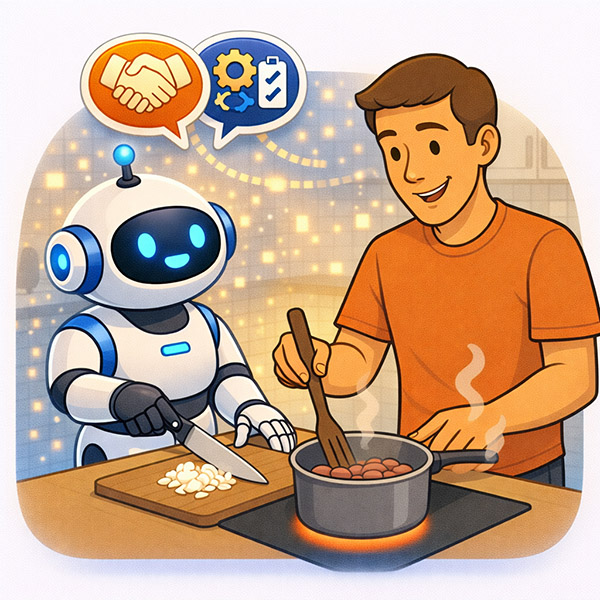
Collaborator — robot and human cook together simultaneously
Collaborator

A full role-sharing scenario where human and robot negotiate who does what, it is the most autonomous and flexible mode of assistance.

Increasing complexity
Full autonomy
Principal Investigators

The Team

Three KTH researchers whose complementary expertise are in spoken dialogue, computer vision, and geometric robot learning forms the scientific backbone of SAInt.

Professor Joakim Gustafson
TMH
Professor, Head of Department of Speech, Music and Hearing
WP1 Lead Multimodal Interaction

With over 30 years of experience, Gustafson's research spans multimodal spoken dialogue systems, human-robot interaction, generative AI, and adaptive speech synthesis. He has led 25 externally funded projects including workpackage leader in five EU projects. Technical Program Chair of Interspeech 2017; Treasurer of ISCA.

Professor Danica Kragic
RPL
Professor, Director of Centre for Autonomous Systems
WP2 Lead Perception & Planning

Kragic's research covers robotics, computer vision, and machine learning, with particular depth in dual-arm manipulation and data-driven grasp synthesis. She received the 2007 IEEE Robotics and Automation Society Early Academic Career Award. ERC Starting Grant (2012), Distinguished Professor Grant from the Swedish Research Council (2019). Member of the Royal Swedish Academy of Sciences and Royal Swedish Academy of Engineering Sciences.

Assistant Professor Noémie Jaquier
RPL
Assistant Professor, Head of GeoRob Lab, Department of Robotics, Perception and Learning
WP3 Lead Adaptive Control

Jaquier's research develops data-efficient and theoretically sound learning algorithms leveraging differential geometry and physics-based inductive bias, enabling robots to learn and adapt with near-human efficiency. PhD from EPFL (2020); postdoctoral experience at KIT's H²T Lab and Stanford Robotics Lab.

Infrastructure

KTH Interaction and Robotics Lab

A one-of-a-kind shared facility for research, education, and innovation in generative AI, human-machine interaction, and robotics.

Built for End-to-End Human-Robot Research

KTH IRL is a unique infrastructure jointly operated by the Department of Speech, Music and Hearing (TMH) and the Department of Robotics, Perception and Learning (RPL). It provides everything needed to conduct human-robot interaction research, from motion-capture data collection through to real-world deployment in domestic environments.

The lab houses over 25 faculty members, around 25 postdocs and close to 100 PhD students across both departments, making it one of Europe's densest concentrations of expertise in social robotics, spoken dialogue, computer vision, and robot learning. For SAInt, it provides the essential physical substrate: smart kitchens, interaction spaces, and a full fleet of humanoid robots.

SAInt will expand the existing humanoid robot fleet up to five humanoid platforms, enabling parallel development and simultaneous testing across multiple research threads.

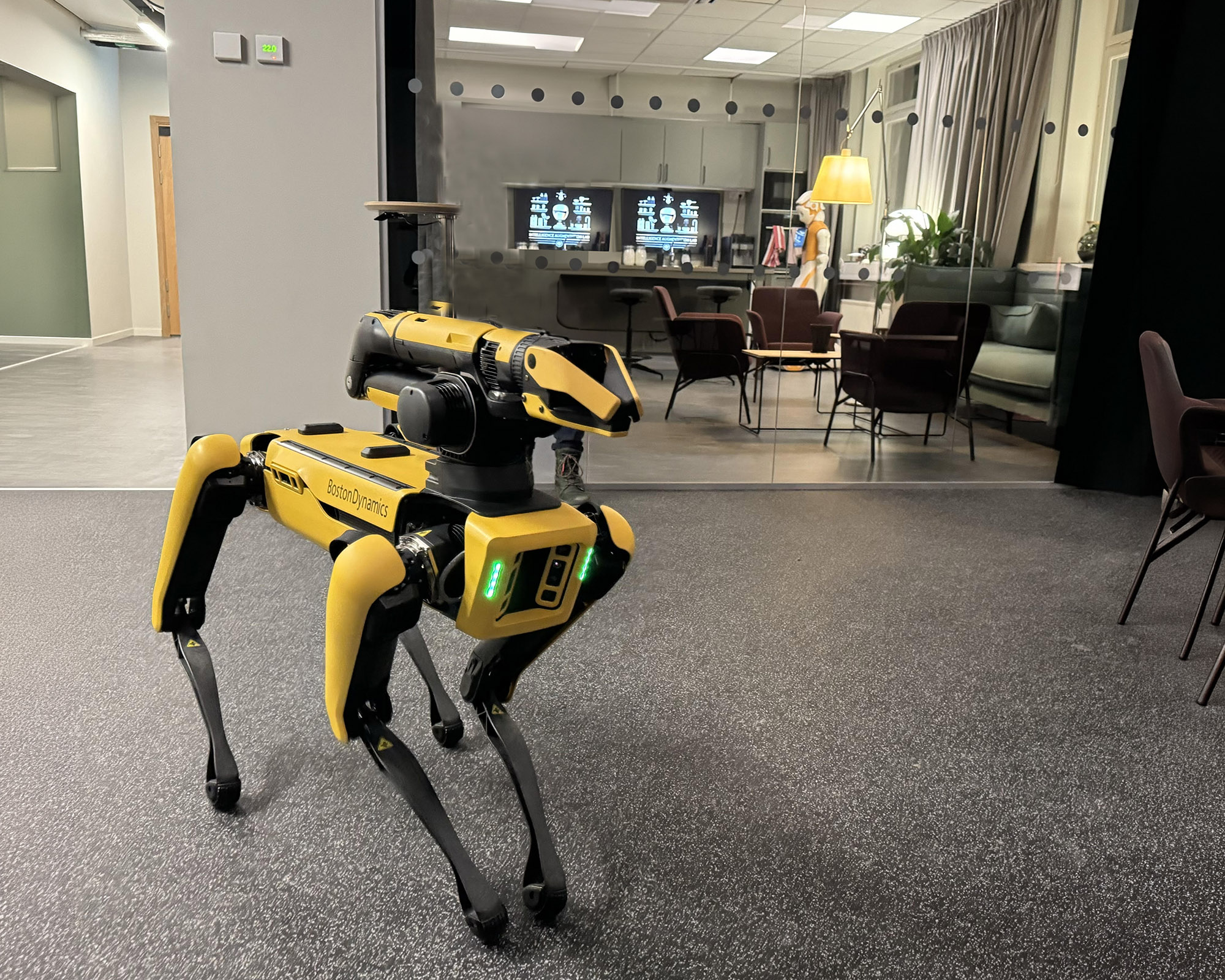
BostonDynamics robot dog infront of the KTH IRL smart kitchen

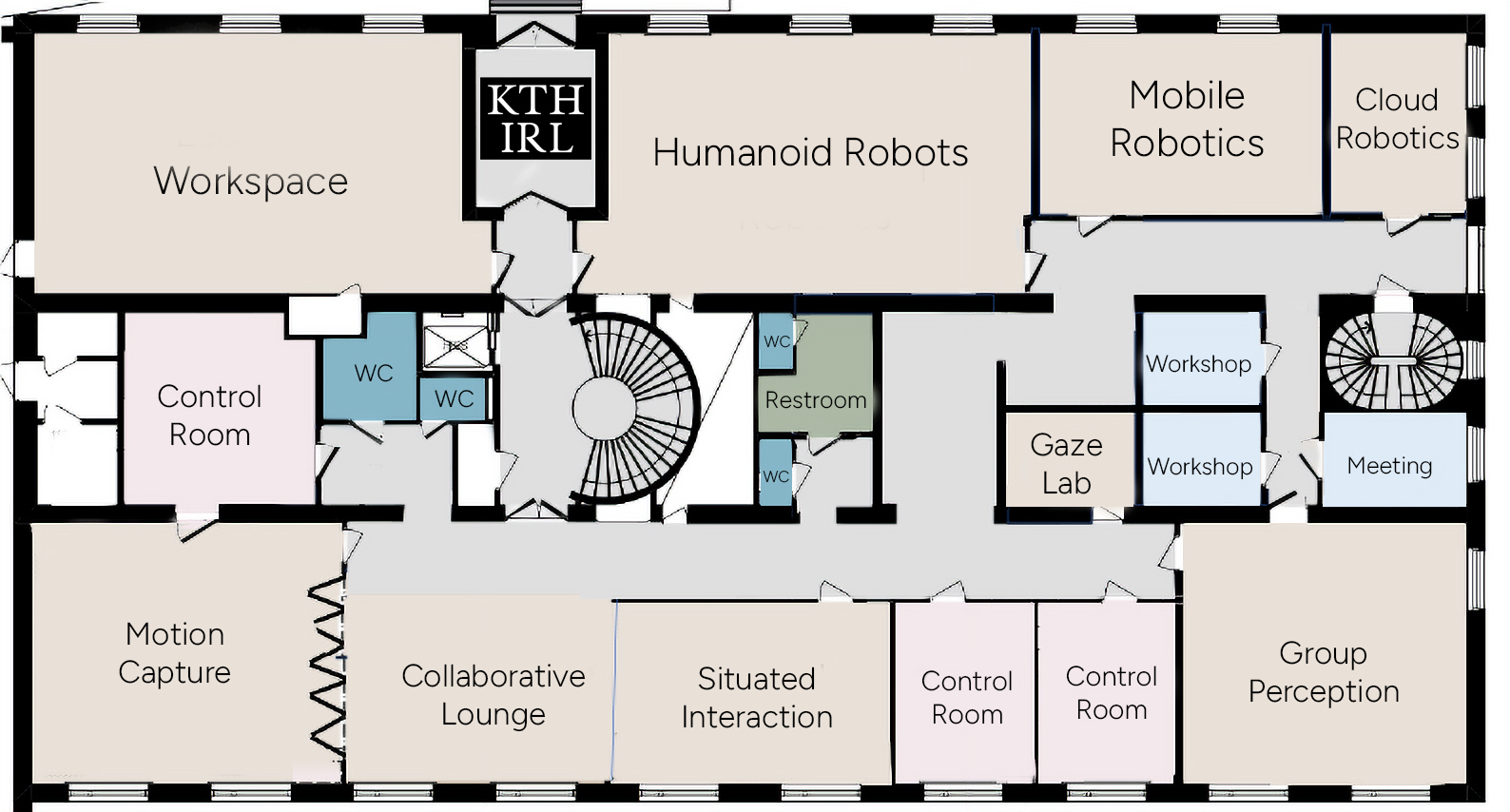
Floor Plan KTH IRL, Lindstedtsvägen 24, KTH Campus, Stockholm

KTH IRL floor plan showing all lab spaces

Lab Spaces

KTH IRL hosts six dedicated research environments, each purpose-built for a distinct aspect of human-robot interaction research.

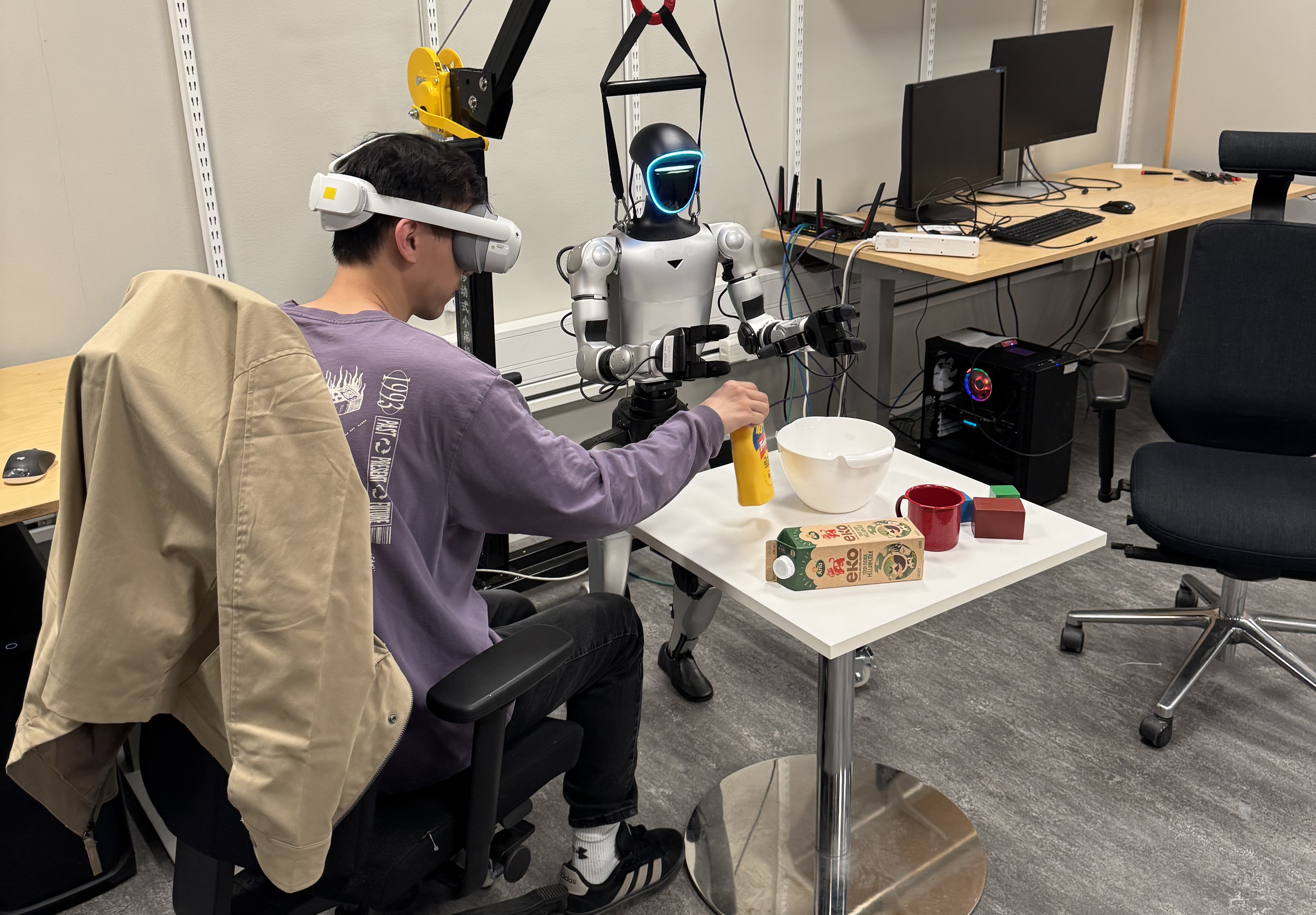
Humanoid Robot Lab — dual-arm robot manipulation setup
Humanoid Robot Lab

The primary development and testing environment for robotic manipulation research, housing a number of dual-arm robotic platforms for dexterous manipulation studies. Through SAInt, this space has been expanded with two humanoid robots from Rainbow and Unitree Robotics. During the project this will be expanded up to five humanoid robots - both legged and wheeled platforms from leading vendors - enabling parallel research threads across WP2 and WP3 simultaneously.

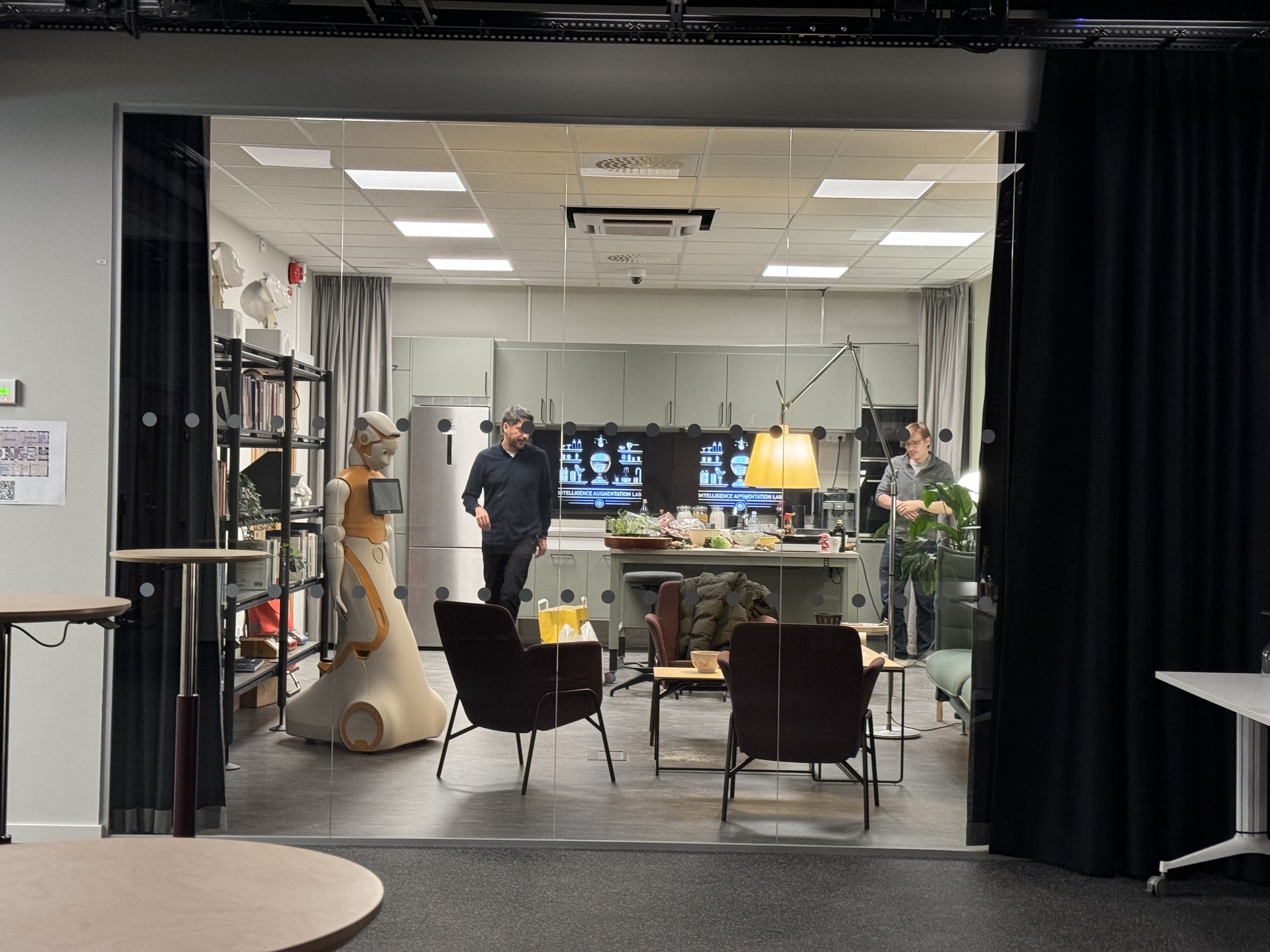
Intelligence Augmentation Lab — instrumented smart kitchen
Intelligence Augmentation Lab

A fully-equipped, sensor-rich domestic kitchen designed for studying AI-assisted daily life. Instrumented with overhead cameras, 2 Meta Aria gaze tracking glasses, embedded displays, and smart appliances, it enables realistic research on cooking assistance, food preparation, and domestic task support. Key environment for SAInt's core scenarios - the robot can assist, instruct, or collaborate on meal preparation in a genuine home-like setting.

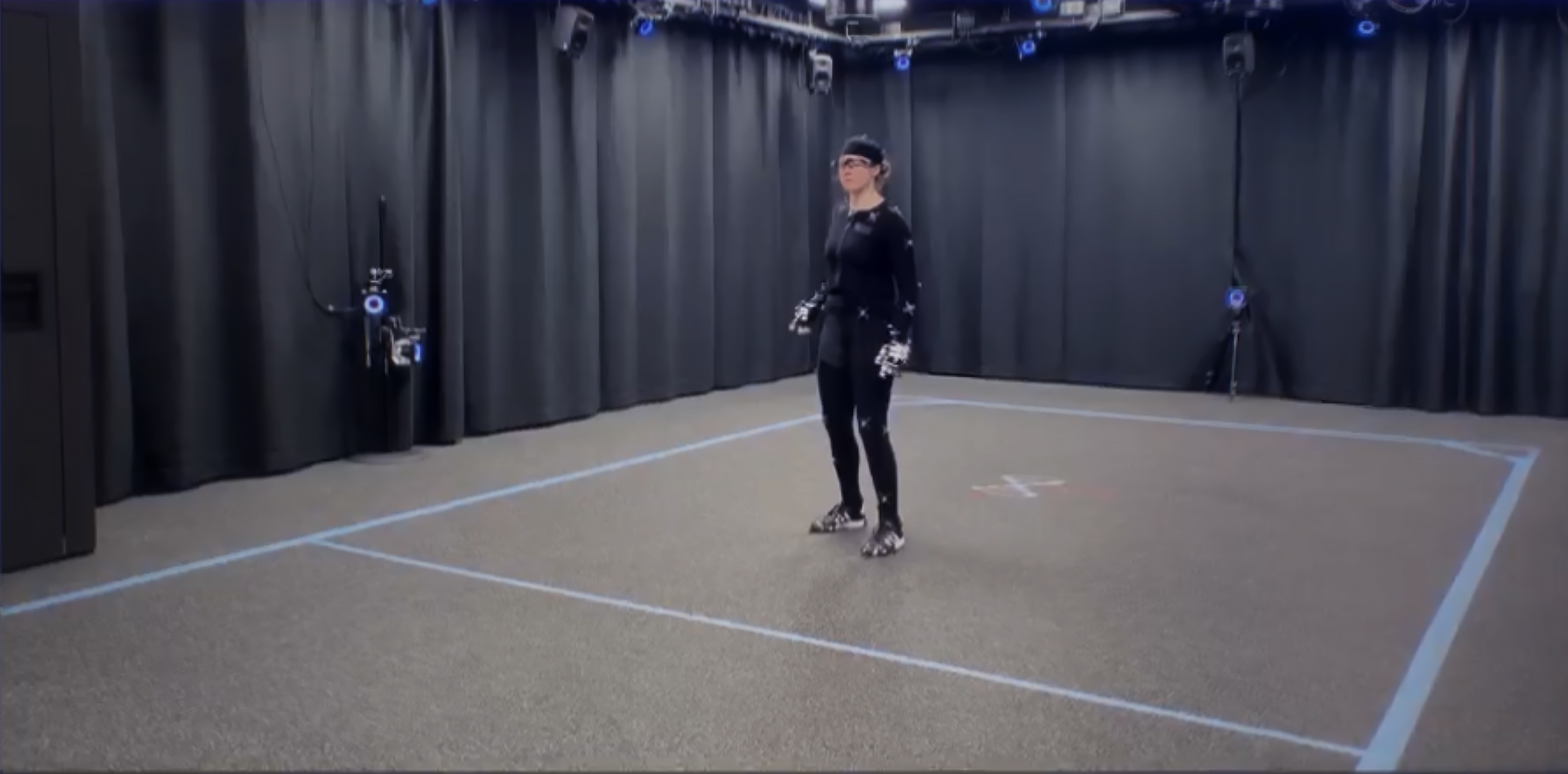
Performance and Multimodal Interaction Lab — motion capture studio
Performance & Multimodal Interaction Lab

A professional full-body motion capture studio with 25+ Optitrack infrared tracking cameras mounted on the ceiling and walls. Additionally we have 3 head mounted Tobii gaze trackers, 2 pairs of Manus gloves, Meta Quest VR headsets as well as a multichannel speaker system and wireless sound recording equipment. In order to sync all input channels we have a Peel capture sytem and Tentacle time code devices. Used for capturing high-fidelity human movement, gesture, and dance for AI training datasets.

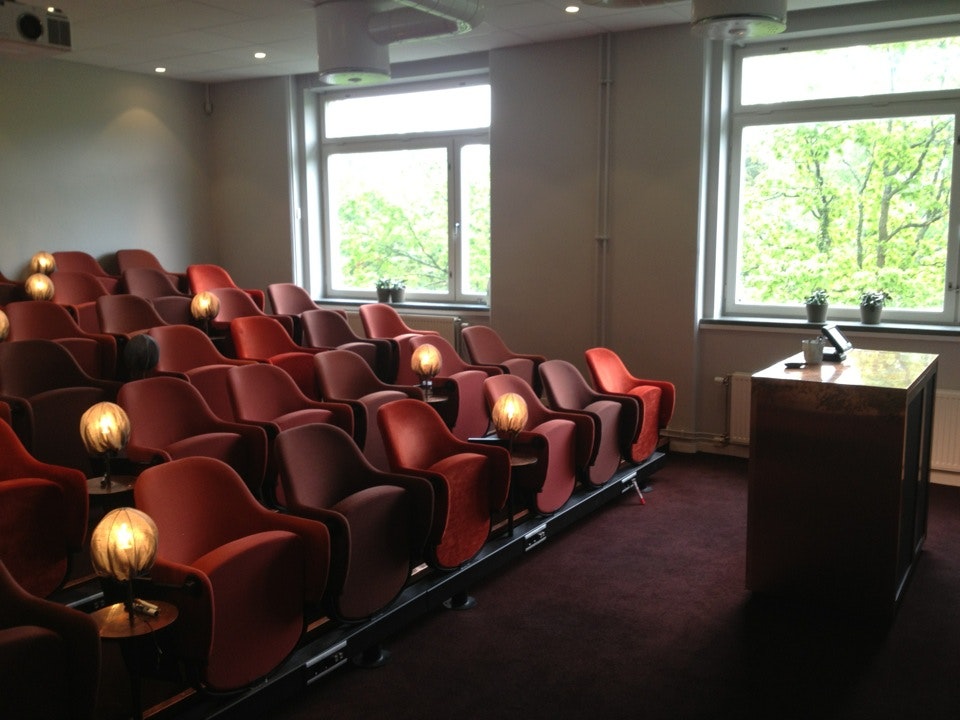
Group Perception Lab — theatre-style seating for audience research
Group Perception Lab

A unique theatre-style space with tiered red velvet seating for up to 50 people, equipped with wireless clickers for audience response studies. Purpose-built for studying group dynamics, audience attention, and social perception in larger gatherings. Enables research into how robots and AI systems should behave in front of groups, panels, and public audiences.

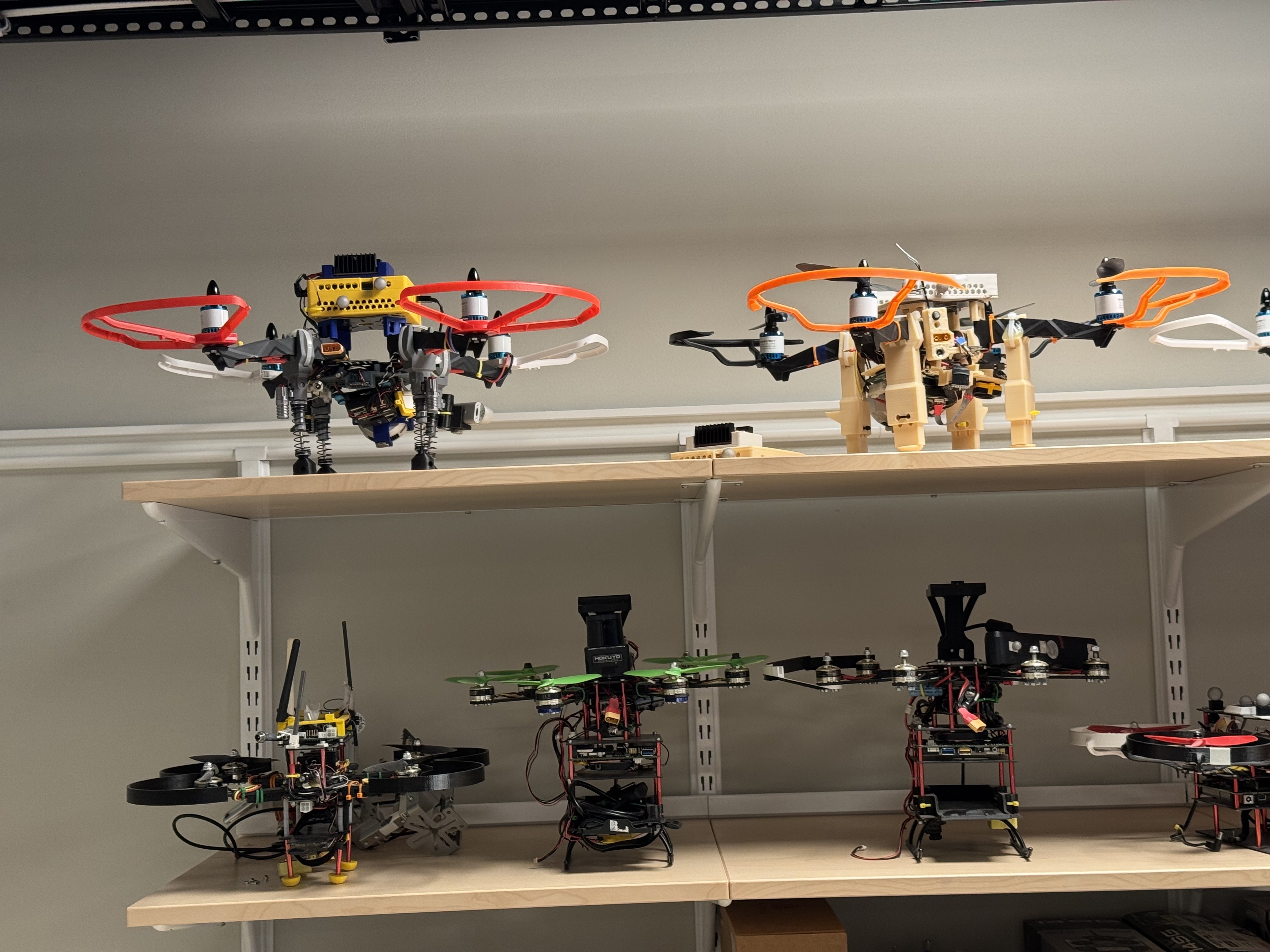
Mobile Robotics Lab — fleet of custom UAV platforms
Mobile Robotics Lab

Houses a fleet of custom-built aerial robots and ground vehicles including multiple quadrotor UAV designs, Boston Dynamics Spot Robot, and ground-based autonomous systems. Equipped with onboard compute, custom sensor arrays, and dedicated workshop space for hardware development. Supports research in autonomous navigation, aerial perception, and multi-robot coordination.

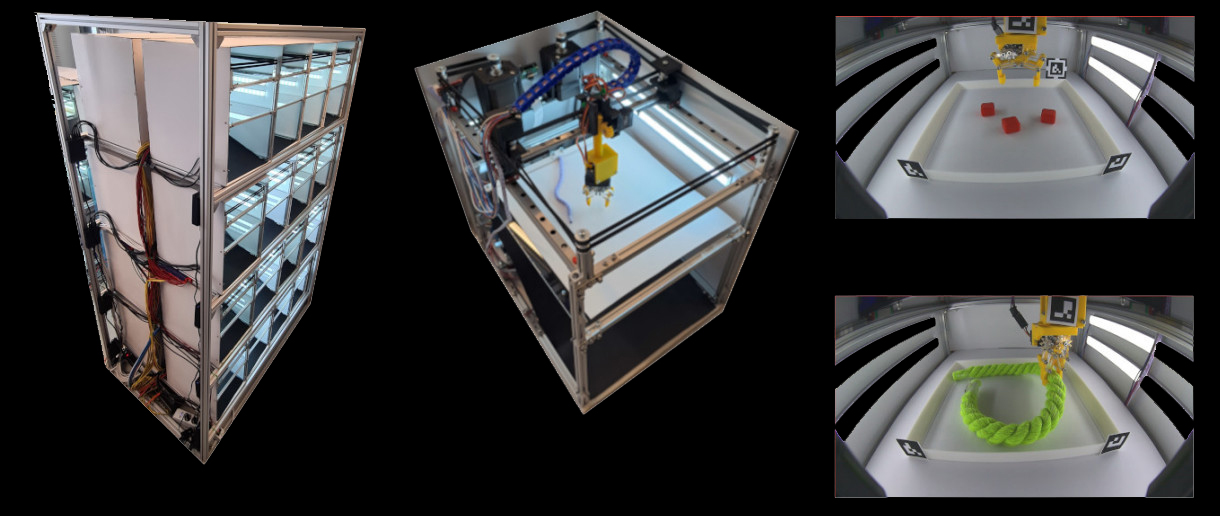
Cloud Robotics Lab — CloudGripper teleoperation hardware
Cloud Robotics Lab

Home of the CloudGripper (cloudgripper.org) is a remotely-operated, transparent gripper enclosure that enables cloud-based robot teleoperation and large-scale data collection over the internet. Researchers worldwide can operate the hardware and collect manipulation data without physical presence, dramatically scaling up dataset generation for robot learning research.

KTH EECS School
Department of Speech, Music and Hearing (TMH)

TMH investigates how humans use voice, music, and sound to communicate and interact. Faculty expertise covers multimodal dialogue systems, generative models for speech and gesture, social robotics, expressive speech synthesis, and face-to-face interaction modelling. TMH leads the interaction and dialogue research in SAInt.

Visit TMH
KTH EECS School
Department of Robotics, Perception & Learning (RPL)

RPL bridges machine learning, computer vision, and robotics to create autonomous systems that perceive and act in the physical world. Faculty expertise includes dexterous manipulation, geometric robot learning, human-robot interaction, formal methods, and autonomous navigation. RPL leads perception and control research in SAInt.

Visit RPL
News & Events

Latest from SAInt

Updates on the project’s milestones, events, and activities.

22 May 2026  •  KTH IRL, Lindstedtsvägen 24, Stockholm

Meet the Humanoid Robots of the Future

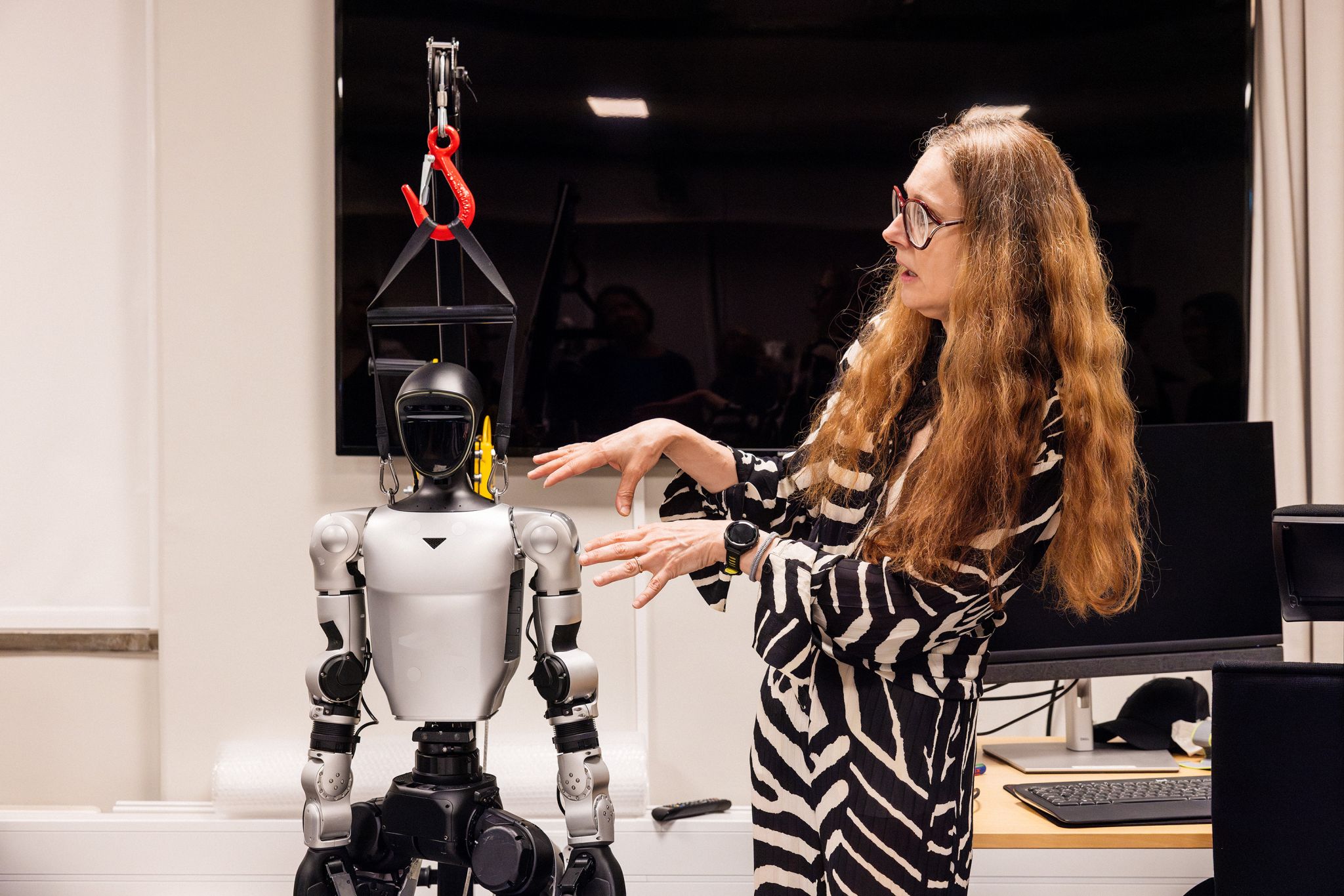
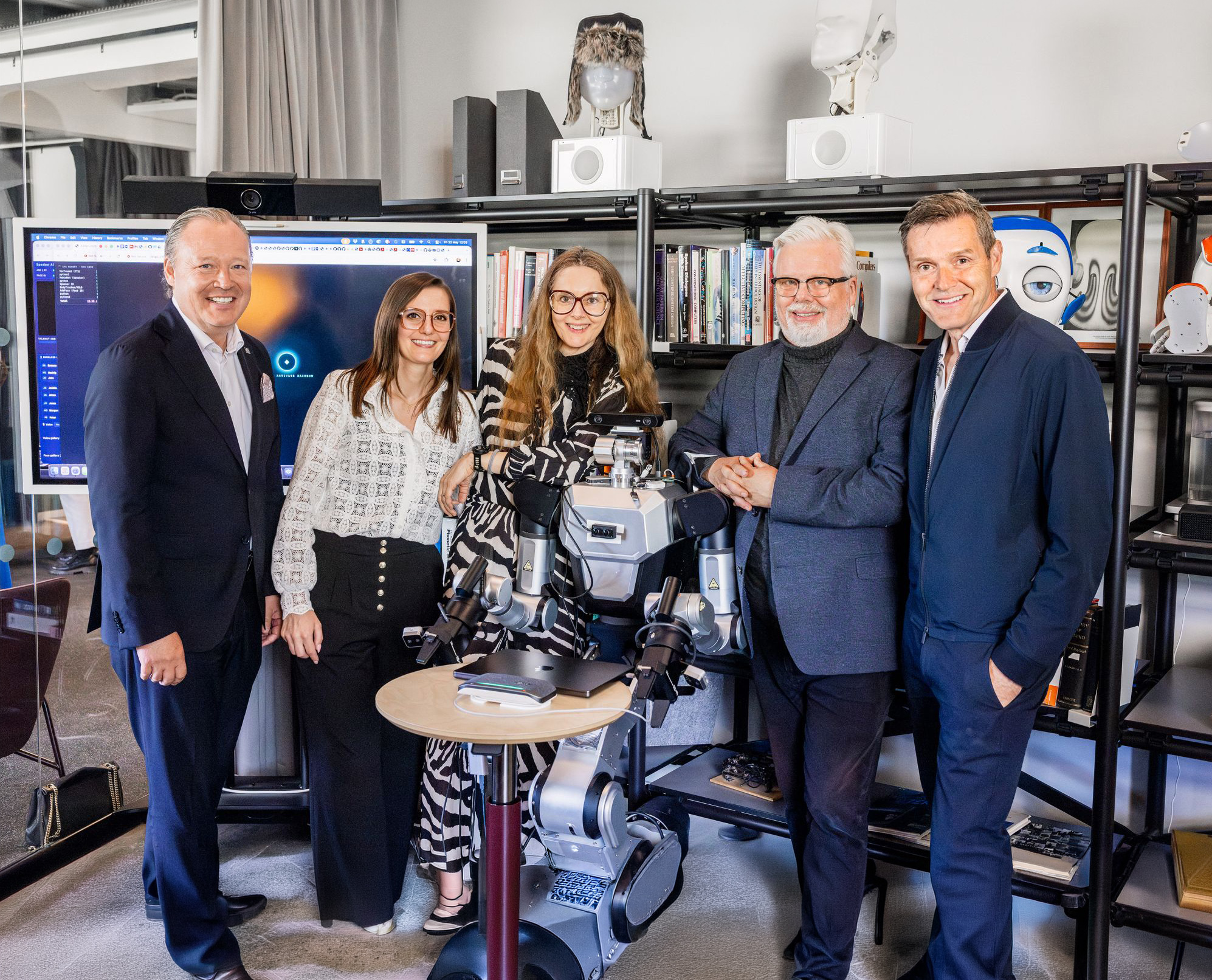
Forty personally invited guests gathered at KTH for an exclusive morning breakfast event marking the official launch of the SAInt project. The audience included representatives from Stiftelsen Promobilia and Permobil, prospective future funders, science journalists, and members of the KTH leadership and development office. The morning was moderated by science journalist Eva Krutmeijer and opened with a welcome by KTH Deputy President Mikael Lindström, followed by remarks from Promobilia chairman Jan-Bernard Waage. A panel conversation with Danica Kragic Jensfelt, Joakim Gustafson, and Noémie Jaquier then took centre stage, before guests divided into two groups for lab tours: one through the smart kitchen lab with Joakim, and one through the humanoid robot lab with Danica and Noémie.

Waage drew on Permobil’s founding legacy, rooted in Per Uddén’s vision of enabling people living with disabilities to live active, independent lives, and called on the research team to be ready to act on results: “Be prepared to succeed” (“Var förberedd på att lyckas”). In the panel, Danica Kragic Jensfelt framed the central research question: “Is the technology ready for humans, and are humans ready for the technology?” Kragic and Gustafson, who together bring more than 60 years of experience in the field, reflected on the long arc from early sensor-equipped wheelchairs to today’s AI-driven humanoids, while Jaquier highlighted her team’s focus on providing safety guarantees: ensuring that if the robot fails, it does nothing harmful rather than something dangerous.

The discussion touched on assistive dressing, early dementia detection through speech, sign language synthesis, and the challenge of calibrating expectations: as Joakim Gustafson put it, promotional robot videos are “like the cutscenes in 90s video games: perfectly rendered, but not the actual gameplay.” SAInt targets three user groups: older adults with mobility difficulties, people living with cognitive impairments, and people with autism. The project will run studies in KTH’s own lab before progressing to real home environments.

As KTH Deputy President Mikael Lindström put it: “We develop technology with the human in focus, not for its own sake, but grounded in people’s everyday lives, integrity and dignity.”

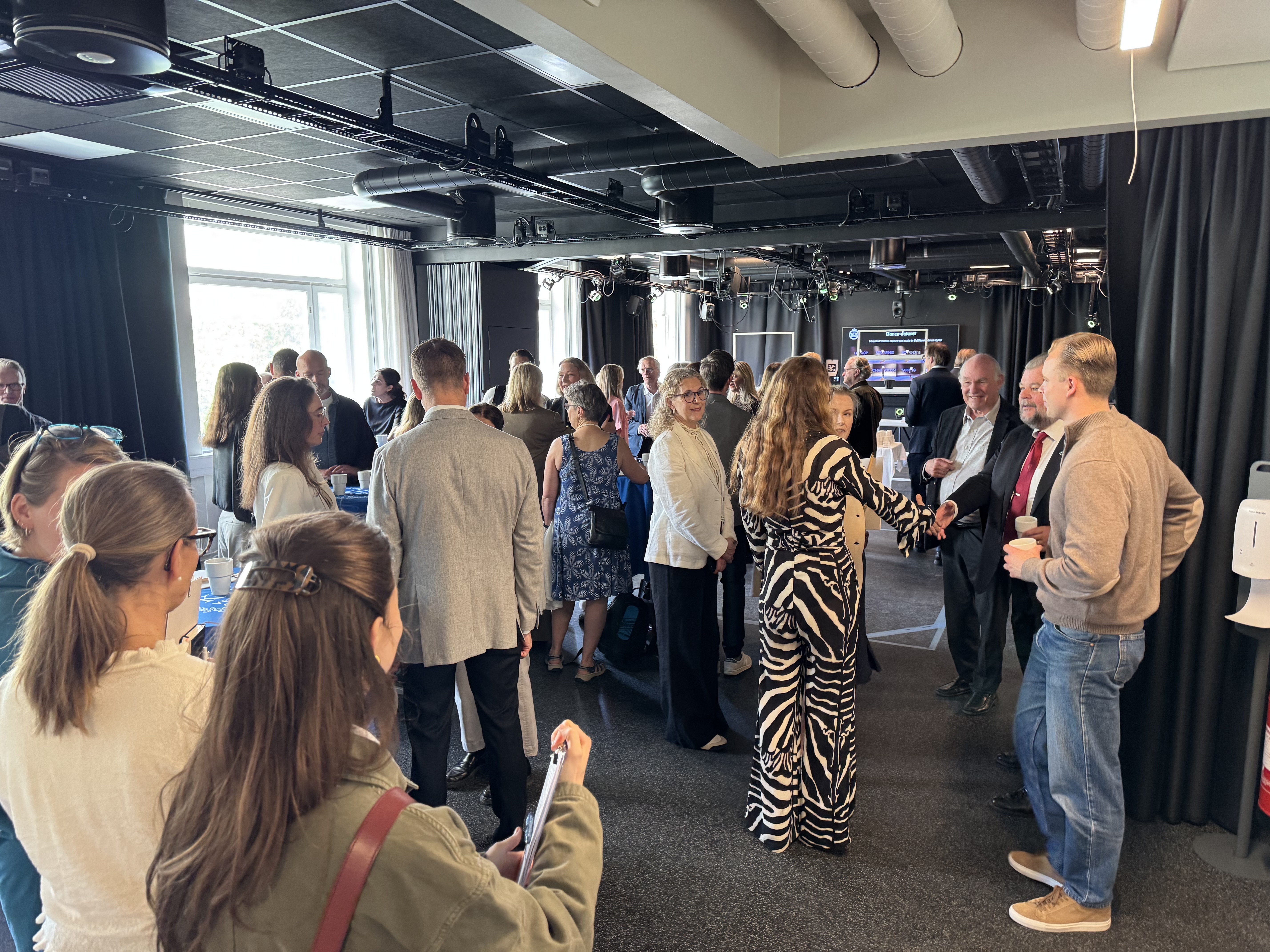
Inauguration KTH IRL Promobilia
Guests mingling at the SAInt inauguration
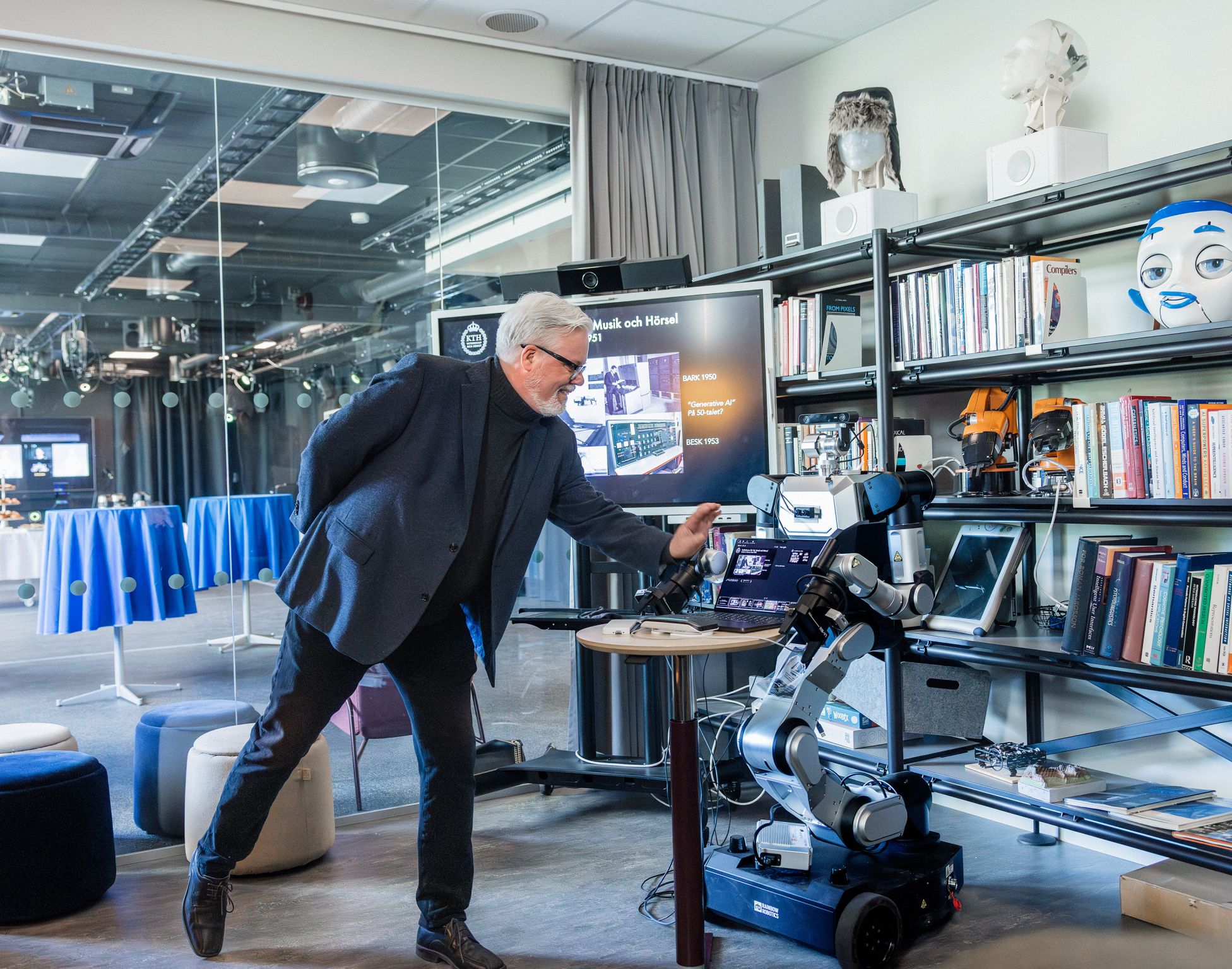
Prof. Joakim Gustafson presenting at the inauguration
Prof. Danica Kragic at the SAInt inauguration
SAInt inauguration — team photo
Press & Media

SAInt in the Media

Coverage of the SAInt project and the research team in news outlets and science media.

Sveriges Radio – Vetenskapsradion

Här är roboten som kan bli din matlagningscoach

Joakim Gustafson and Danica Kragic are interviewed about the SAInt project and the future of humanoid robots as assistants in everyday life. Published 3 June 2026 · 20 min.

Listen to the programme
TV4 Nyhetsmorgon / Nyhetsdagen

Humanoida robotar och forskning på KTH

Science journalist Eva Krutmeijer reviews humanoid robots and the research being conducted at KTH. Broadcast 27 May 2026 at 11:15.

Watch the segment
Feber

Nytt KTH-projekt ska göra robotar till följeslagare. Wille jublar.

Swedish tech publication Feber covers the SAInt project launch, reporting on how advanced AI and humanoid robots could provide individualised support to people living with disabilities. Published 24 May 2026.

Read the article
Sveriges Radio – Studio Ett

KTH lanserar ny forskningssatsning på människolika robotar

Vetenskapsradions Camilla Widebeck reports live from the press conference and the robot lab at KTH. The segment covers how AI and humanoid robots will interact with humans and provide personalised support to people with disabilities. Published 22 May 2026 · 4:37 min.

Listen to the programme
KTH News

Robotar ska testas i hemmet

KTH’s own news coverage of the SAInt project launch, published 22 May 2026.

Read the article
Assistanskoll

Robotar bör bli rättighet som andra hjälpmedel

Follow-up coverage in Assistanskoll arguing that robots should be recognised as a right on a par with other assistive devices. Published 6 December 2025.

Read the article
Assistanskoll

KTH-robotar ska hjälpa äldre och funktionshindrade

Coverage of the SAInt project at the time of its funding announcement — before the project had started — focusing on the potential for humanoid robots to support older adults and people with disabilities. Published 4 December 2025.

Read the article
Sister Project

Kitchen Companion for Healthy Ageing

Kitchen Companion is a closely related research project led by the same PI, Prof. Joakim Gustafson, and shares SAInt's core motivation: supporting elderly people in maintaining independent and meaningful lives at home.

The project develops a proactive, voice-based AI assistant that helps older adults living alone cook nutritious meals and stay socially connected — using speech, audio, and privacy-preserving edge video to deliver context-aware cooking guidance and motivational dialogue.

Visit the Kitchen Companion project
Focus
Proactive voice AI for cooking assistance and reducing social isolation in older adults living alone
Funder
Familjen Kamprads Stiftelse
Shared Infrastructure
KTH Intelligence Augmentation Lab — instrumented smart kitchen used by both projects
PIs
Joakim Gustafson (KTH)
Sanna Kuoppamäki (KTH)
Morgan Fredriksson (Nagoon)
Contact

Get Involved

SAInt welcomes collaborations with care facilities, patient advocacy organizations, industrial partners, and international research groups. We are also recruiting PhD students and postdocs.

Postdoc · 2–4 years
Postdoc in Generative AI for Humanoid Assistive Robots
Design and run human-robot interaction experiments for a humanoid robot that understands user goals, actions, and cognitive states. Collaborate with three PIs and fellow researchers across the SAInt project.
Deadline: 15 April 2026  •  KTH EECS, Stockholm
Apply at KTH
PhD (2 positions) · 4 years
Doctoral Student in Robotics and Geometric Machine Learning
Develop robot learning and control algorithms using differential geometry and physics-informed methods, targeting data-efficient, safe motion generation and manipulation for humanoid robots.
Deadline: 15 April 2026  •  KTH EECS, Stockholm
Apply at KTH
PhD · 4 years
Doctoral Student in Generative AI for Humanoid Assistive Robots
Build proactive dialogue systems for humanoid robots assisting elderly and vulnerable users — going beyond reactive interactions toward context-aware, goal-driven conversation architectures.
Deadline: 20 April 2026  •  KTH TMH/EECS, Stockholm
Apply at KTH